10.23.2012
Now, preceding the next Now
I have been way behind on posting anything lately.
I thought that purchasing a portable audio recorder (Tascam DR-40) several months ago would help me to post sounds more frequently. That hasn't been the case. Instead I have been recording more audio than I have time to edit and post. The current thinking is that I'll sit down, and after working out some appropriate hosting facility, will make public this material.
In addition, I've been wondering how to separate time spent testing JRB ModuleModules and the more intentional recordings for the self. Jury still out. Hanging expected.
Until I figure it out I'll toy with posting sounds that I feel are representative of particular ModuleModule Modules, but are not intentionally 'demos' - a concept that continues to elude me.
LOOK HERE
(both EQ tests really fall into the Hypnagogia body)


7.24.2012

2.13.2012
Loops, exercises, etc.

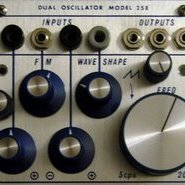
I've posted a few snippets to soundcloud this afternoon. All stem from explorations of a small number of modules - <8 spaces specifically. 2.13 is a sequence, with some uncertain components, that was patched and manipulated throughout the weekend (as pictured). Throatish employed 140/180/291/266/259, and is otherwise pretty self-explanatory. Line 1&2 were experiments integrating the 140 as an erratic clock and modulation source - and also included 281/291/259/266.
2.02.2012
1.28.2012
New Drawings
Click them for larger (Flickr) views.

Scene 4 (After Casting the Glass Axe).
Second preparatory draft. 12" x 8", Pencil.

Scene 12 (A Break Between Takes)
Second preparatory draft. 12" x 7.5", Pencil.

Scene 15 (How the Left Hand May Control the Right)
Second preparatory draft. 12" x 7.5", Pencil.
Scene 4 (After Casting the Glass Axe).
Second preparatory draft. 12" x 8", Pencil.
Scene 12 (A Break Between Takes)
Second preparatory draft. 12" x 7.5", Pencil.
Scene 15 (How the Left Hand May Control the Right)
Second preparatory draft. 12" x 7.5", Pencil.
11.14.2011
Metasomatism

A short piece, the first I've posted in quite some time.
I've added a 140 to my system, and had some fun with it here in conjunction with the 281 and 266. I'm fond of the ping-pong duophony of the 266, and the minor illusion of delay here.
I'll be focusing my attention on a series of drawings over the next few months, but will try to post with more frequency my less frequent studies on the 200.
5.01.2011
Vague Terrain 19: Schematic As Score

Moritz Ellerich's Fabelphonetikum schematic
Derek Holzer has put together an impressive essay on artists experimenting with electronics for edition 19 of Vague Terrain entitled Schematic as Score, and kindly included me among them. Framing it as he does with his own work reinterpreting Tudor's Rainforest, the article is an inspired merging of concepts, visuals, and audio results. The article includes work by:
Derek Holzer/ Jason R. Butcher / Jessica Rylan / Lesley Flanigan / Loud Objects / Martin Howse / Moritz Ellerich / Peter Blasser / Synchronator
- Click here to view the issue -
My entry includes remarks on Self-Playing process, and the audio recording of the "For Loud Speakers" patch diagram seen here (partially):

I recommend browsing through previous Vague Terrain journals as well - as they are all quite interesting.
4.28.2011
S3 - model 297 experiments

I cannot believe it has been so long since my last post.
Changes in work and living situations (all for the best), have distracted me a bit from this purpose. I present now, a few sketches from the past few months.
I added an Infinite Phase Shifter model 297 to my system recently and these recordings are all experiments intended to familiarize myself with its behavior. Particularly satisfying to me among this batch are Crackling Line and Dry Pine Sap Line, which are both Self-Playing experiments using only the Infinite Phase Shifter, Complex Waveform Generator, and the Source of Uncertainty. I suggest listening to them at relatively high volume through speakers in a nearly empty room
Watered Path required most of the system, the 297 included in order to manipulate feedback, and is not a Self-Playing Patch.
Driving Conversation, also served as a test of the extreme times available through external control of the 281's Attack and Decay stages. The actual piece takes a very long time to decay completely to silence.
I hope enjoyment is the result upon listening.
12.15.2010
11.19.2010
Restless Devices - Samples
As promised, images from the "Restless Devices" show with Joe Tsambiras currently running through Dec 5th at Beep Beep Gallery, for those not proximal enough to visit.
A recording of the patch what was on playing throughout the gallery the night of the opening:
Stills from the animations - with backgrounds based on pages of Cornelius Cardew's Treatise.

Untitled (Treatise Pp. 125-126), 2010

Untitled (Treatise p. 31, An History of Elitism 1965-2010), 2010

Untitled (Treatise p. 188), 2010
And here are the images I used for the fascia of various sound players, featuring recordings and experiments on the Series 200:

4.5.10, 2010

12.20.09.SPP, 2010

Untitled, 2010
And one of the non-sound player noodle images:

Untitled, 2010
A recording of the patch what was on playing throughout the gallery the night of the opening:
Stills from the animations - with backgrounds based on pages of Cornelius Cardew's Treatise.
Untitled (Treatise Pp. 125-126), 2010
Untitled (Treatise p. 31, An History of Elitism 1965-2010), 2010
Untitled (Treatise p. 188), 2010
And here are the images I used for the fascia of various sound players, featuring recordings and experiments on the Series 200:
4.5.10, 2010
12.20.09.SPP, 2010
Untitled, 2010
And one of the non-sound player noodle images:
Untitled, 2010
10.19.2010
SPP / ERR
For your enjoyment (?), a few recent recordings and details of two images for the upcoming show at Beep Beep Gallery (see previous post).

10.17.2010.2.SPP - A short recording of a self-playing patch (noodle) from this past weekend. Intended to be listened to at high level, the end of silence marks the moment I turn the system on:

Erratic Music Box:
10.17.2010.2.SPP - A short recording of a self-playing patch (noodle) from this past weekend. Intended to be listened to at high level, the end of silence marks the moment I turn the system on:
Erratic Music Box:
10.18.2010
Upcoming exhibition - Restless Devices

Some previews to follow this post...
4.05.2010
complex.waveform.degenerator.edit.

For your enjoyment, a short edit from a recording this afternoon. I employed the same patch used for a collaborative performance with Don Hassler for the recent Atlanta installment of the International Noise Conference at Eyedrum. One might assume that there are a number of external sound manglers being applied, but everything, with the exception of a slight reverb added in ProTools, is generated on the Buchla Series 200.
1.31.2010
Chaotic Synthesis
A few months ago, I created a series of recordings in response to an incredible article highlighting some of the most remarkable properties of the Buchla Oscillators of the 100 and 200 series. The article is Dan Slater's Chaotic Sound Synthesis, published in Computer Music Journal, Summer 1998 Volume 22, Number 2, ISSN 0148-9267. Here is a photograph from the article, of a CBS Performance System 3 featuring a chaotic patch:

This article was also available for a period on the web, at a time when there was very little info of Buchla systems to be found. If only those who now decry what they perceive as "secrecy" on the part of Buchla users knew how hard it was to find out exactly what a Kinesthetic Input Port was ten or more years ago! In any case, I digress.
The article is a wonderful resource filled with several very interesting approaches to creating chaotic sound - and once my 200 was operational, I almost immediately began directed experiments in order to explore some of the territory Slater describes.
Chaotic Synthesis Recording #3 (edit), August 2009:
If you would like a copy of the entire (19:40) recording, I have self-produced a limited CD release of 20, priced at $10 to be sold at some upcoming shows. E-Mail me if you'd like to order one. Here is a photo of the CD and the single sided bristol "cover" - that features an illustration of the patch used for the piece:

For some other demonstrations of Buchla VCO cross-modulation characteristics be sure to check out the following links:
Christian Mirande's 258 Demonstration video
Mono-Poly's 158 Demonstration audio
Mono-Poly's 144 Demonstration audio
This article was also available for a period on the web, at a time when there was very little info of Buchla systems to be found. If only those who now decry what they perceive as "secrecy" on the part of Buchla users knew how hard it was to find out exactly what a Kinesthetic Input Port was ten or more years ago! In any case, I digress.
The article is a wonderful resource filled with several very interesting approaches to creating chaotic sound - and once my 200 was operational, I almost immediately began directed experiments in order to explore some of the territory Slater describes.
Chaotic Synthesis Recording #3 (edit), August 2009:
If you would like a copy of the entire (19:40) recording, I have self-produced a limited CD release of 20, priced at $10 to be sold at some upcoming shows. E-Mail me if you'd like to order one. Here is a photo of the CD and the single sided bristol "cover" - that features an illustration of the patch used for the piece:
For some other demonstrations of Buchla VCO cross-modulation characteristics be sure to check out the following links:
Christian Mirande's 258 Demonstration video
Mono-Poly's 158 Demonstration audio
Mono-Poly's 144 Demonstration audio
1.22.2010
3 Edits
Here are some snippets of three recent tracks - all single-take recordings of the buchla 200 without any additional equipment. Reverb was added in protools afterward. The patch developed for "A Difficult Embouchure" is more or less what is at the core of each of these tracks, with deviations and additional modules besides the 259 and 266 occasionally being incorporated.
12.20.09.3 Self Playing Suite (edit)
- TRACK REMOVED -
Comprised of several (~12) single-take segments of a single patch, between which I made adjustments mainly to the timing and timbral parameters at work (but without changing the actual patch interconnections).
12.23.09 (edit)
- TRACK REMOVED -
This experiment was conducted in a similar manner to playing the "Operation" boardgame. The 259's modulation oscillator CV output was fed back to its processing input, and in addition, several other CVs were stacked to this same connection (4 or more). For the duration of this track, I merely held the banana plug connection inside the jack but didn't not fully plug it in, touching it erratically to the sides, making or breaking the connection. At various points, gate modes were altered as well. This is a bit unusual in that few (perhaps none) of the other tracks using this core patch make any use of the 292C Lopass Gate at all.
1.20.10 (edit)
This track represents an attempt to replicate a track from December which substituted the 258C for the 259 I most often rely on as a sole or primary source with excellent results. This track lacks the subtleties of the original (which relied heavily on sine>square transitions), but has more variation due to the 259's expanded capabilities. The 275 was critical to this piece in adding character/dimension.
12.20.09.3 Self Playing Suite (edit)
- TRACK REMOVED -
Comprised of several (~12) single-take segments of a single patch, between which I made adjustments mainly to the timing and timbral parameters at work (but without changing the actual patch interconnections).
12.23.09 (edit)
- TRACK REMOVED -
This experiment was conducted in a similar manner to playing the "Operation" boardgame. The 259's modulation oscillator CV output was fed back to its processing input, and in addition, several other CVs were stacked to this same connection (4 or more). For the duration of this track, I merely held the banana plug connection inside the jack but didn't not fully plug it in, touching it erratically to the sides, making or breaking the connection. At various points, gate modes were altered as well. This is a bit unusual in that few (perhaps none) of the other tracks using this core patch make any use of the 292C Lopass Gate at all.
1.20.10 (edit)
This track represents an attempt to replicate a track from December which substituted the 258C for the 259 I most often rely on as a sole or primary source with excellent results. This track lacks the subtleties of the original (which relied heavily on sine>square transitions), but has more variation due to the 259's expanded capabilities. The 275 was critical to this piece in adding character/dimension.
12.14.2009
12/12/12/13

Continuing with the patch I've been using lately - the core of which is the 266 and a single 259 - while directing the experiment toward including "movements" (7, in this instance) within a single self-playing recording:
And from Saturday - two takes of the same Self-Playing sequence (or rather, with two patch cables added for the slower, second take). This experiment deviates from a standard sequence with nested loops through the use of second external clock source under the influence of random values also advancing the 250e. Some reverb added in protools:
12.07.2009
4-H Club (in response to a drawing)
Golden Blizzard - an artist collective of which I am a member - was recently selected to participate in More Mergers & Acquisitions on display December 10, 2009 - February 14, 2010 at the Atlanta Contemporary Art Center. Seeing that the collective has something of a history of self-celebration and operates at times like a recirculating delay line overdriven with feedback, we decided to each reinterpret a single arbitrary, older piece of work for the show.

Golden Blizzard
4-H Club, 2006
22 x 30 inches
Although I had originally planned on a different approach, in the end I chose to respond by recording a piece with the Buchla and reformat one of the solid state audio players I created for the most recent Golden Blizzard show (seen here). Below is a photograph of the finished player installed in the gallery:

Jason R. Butcher
4-H Club, 2009
And of course, the track itself - All Buchla 200, with processing/editing by way of ProTools:
The show opens December 10, 8-10PM.
Although I've spoiled the surprise as to my own work - I'm sure my Blizzmates' work will amaze and stimulate you.

Golden Blizzard
4-H Club, 2006
22 x 30 inches
Although I had originally planned on a different approach, in the end I chose to respond by recording a piece with the Buchla and reformat one of the solid state audio players I created for the most recent Golden Blizzard show (seen here). Below is a photograph of the finished player installed in the gallery:
Jason R. Butcher
4-H Club, 2009
And of course, the track itself - All Buchla 200, with processing/editing by way of ProTools:
The show opens December 10, 8-10PM.
Although I've spoiled the surprise as to my own work - I'm sure my Blizzmates' work will amaze and stimulate you.
12.01.2009
11.27.09 Self-Playing Recordings
I spent most of the day leading up to the evening performance with Don Hassler at Railroad Earth (excerpted here) developing a Self-Playing patch that could be deviated from for the show. Most notable between these two recordings, the performance excerpt, and "A Difficult Embouchure" (recorded two days later) are changes to control of the Lopass Gate and function generator patching. My goal with each of these patches, was to avoid the easiest solution - some method of randomly addressing 250e stages. In these 11.27 recordings, a pair of function generators controlled aspects of the 266, which were fed back to the 281, as well as to the 259s. I scaled back further for "Embouchure" which began as an experiment to see with how few cables I could achieve a sufficiently interesting Self-Playing structure - but instead led to the elimination the function generators and gating altogether, instead using a rapidly changing fluctuating random voltage to pulse the quantized and distributed sections of the 266 patched to a single 259.
The video, of a descent in the elevator of Smith Tower in Seattle, seemed to be a fitting match and a fun way to deliver a Self-Playing track. Seeing that Self-Playing work is relatively valueless in the time domain, the counting down of the floors here seemed to me to function nicely in place of any discernible dynamic in the overall recording. Thus you know - at least approximately - when you may expect it to end.
11.29.2009
A Difficult Embouchure

A Self-Playing Experiment for the Buchla 259 & 266 only.
As evident in the photo, a great deal of feedback occurring between various sections of the 266, with outputs coupled to all voltage controlled parameters of the 259.
A warped woodwind awaits:
11.16.2009
Holy Terror

Unlike the first few weeks (or even months) after my 200 came to life (01.09) - which saw me running through some of the vast timbres the instrument is capable of with great abandon - I've been spending my time lately trying to examine subtle properties within the instrument and develop greater proficiency in playing and composing with it.
This often takes the form of small exercises.
I turned my attention this Saturday once again to the 221, and after concentrating for some time on the touchplate surface itself, I settled upon the joystick - or 2D voltage source as it is described on the panel. The initial purpose was to try to develop accurate control when using it in instances where it affects pitch - that is to say where any mis/use might be easily distinguishable by the listener. Seeing that the entire 221 moves laterally (to provide a proportional voltage output which one could use for vibrato, etc), one has to be careful when moving the joystick not to shift the entire surface of the 221.
In any case here is what resulted from the latest exercises - I offer you Holy Terror:
The track is comprised of three takes. In each, I gradually decreased the Y coordinate of the 221's joystick, while using my other hand to modulate stereo placement of both 207 panning channels via the lateral CV output. The joystick's Y axis CV was patched to the Primary Osc of a single 259. Amplitude modulation was being provided by the Modulation Osc, which was in turn phase-locked to the Primary Osc. The timbre section was being altered through some arbitrary 250e/266 strobe addressing (the details of which I can't quite recall). The Primary Osc output is fed to a 292 channel (set to combo - knob at 100%), and sent to a panning channel of the 207 and a 275 channel with the send/return directly connected. This 275 mix output was then sent to the other 207 panning channel.
Subscribe to:
Posts (Atom)